

Fast fashion, the rapid production of inexpensive clothing in response to market trends, is expanding quickly, taking a toll on the Earth while it does. The term “fast fashion” was first introduced in the 1990s, when Zara, a popular clothing brand, introduced their plan to get clothing from the design stage to stores in 15 days or less.
Fast fashion companies focus on creating cheap clothing in order to keep up with rapidly changing fashion trends. Since the creation of Zara, the number of fast fashion companies has exploded, including popular clothing brands like Shein and H&M. Other brands that are considered fast fashion include Brandy Melville, Edikted, PacSun, and Urban Outfitters. A full list of brands considered to be “fast fashion” can be found here.
While it seems extremely convenient for consumers to be able to purchase cheap clothing in order to keep up with the latest trends, fast fashion has consequences for the environment. According to Earth.org, fast fashion production comprises 10% of total global carbon emissions, and releases 500,000 tons of microfibers into the ocean each year, which is the equivalent of 50 billion plastic bottles. The fast fashion industry is the second largest consumer of water amongst industries, and the creation of one pair of jeans can use 2,000 gallons of water.
Microplastics are another concern. A 2017 Report from the IUCN found that 35% of all microplastics come from the laundering of synthetic materials, including polyester, a commonly used material in fast fashion. The rate at which people are consuming and discarding clothing is increasing rapidly, and as of 2015 the world was consuming 400% more clothing than in 1995.
Despite 54% of Gen Z saying sustainability is important to them, people in the 18-24 age group are the leading consumers of fast fashion. This gap in the beliefs held by young people and the actions they take is known as the intention gap, mainly driven by the cost of sustainable clothing and the influences social media has on fashion.
A large influence on the shift in consumer behavior can be attributed to the growing influence of social media and the increased prevalence of online shopping. Social media has a tendency to promote the rapid consumption of fashion, with influencers constantly promoting products that are not just limited to clothing. And, with online shopping, consumers can press one singular button and have access to anything they may want to purchase. This intense pressure coming from social media to keep up with trends coupled with anything consumers may want to buy being at their fingertips creates a growing demand for products. This demand is what is leading, in part, to the rise of fast fashion.
Despite the way social media can negatively impact fashion, it can also be used for good. On popular social media apps, there is a growing “slow fashion” community, which encourages people to buy clothing that is sustainably made. According to Fashion Takes Action, the slow fashion community focuses on “sustainability and ethical practices in fashion.” These slow fashion movements often include young people, which offers hope for the future generation to fight against fast fashion.
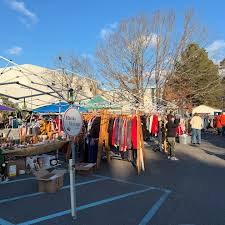
As Gen-Z has worked to become more sustainable, purchasing clothes from thrift stores has become more and more popular. Teenagers and other young people have been flocking to events like the local VB Flea Market, which is a vintage market that takes place every third Saturday of the month and every third Friday from May to October and April to November, in the Vibe District of the Oceanfront. There, vendors are able to set up booths to sell thrifted clothing, shoes, and other goods. Vendors are also able to sell their own local products, like handmade jewelry and even some food.
Some Princess Anne students are also joining the ranks of those scouring thrift store racks for good finds. PA seniors Anna Chandler and Sophia Gregory have their own thrifting business, Down the Rabbit Hole Thrift, where they resell thrifted clothing both in person and online.
The two explained that while the business may have started due to their passion for thrifting clothing, it is also a way for them to make a positive impact on the world. “We always thought that sustainable fashion was something that was not talked about enough,” Chandler explained. “We’ve seen online that there are places where it’s just like piles and piles of discarded clothing that nobody ever wears or touches.”
Despite the growing trendiness of buying secondhand, many young people, including students at PA, say it is easier to buy from fast-fashion brands, because fast fashion brands often sell cheap, widely available, trendy clothing.
In a poll conducted amongst 78 Princess Anne students, only 11.5% of respondents said they consider the environmental impact of clothing when purchasing. Style and cost were the two factors considered most by PA students.
Students also cite concerns about the costliness of purchasing clothing that is sustainably made. While a report from the National Research Federation found that half to two-thirds of shoppers overall would pay more for sustainable clothing, that number does not necessarily translate accurately into real life. In the same poll as above, 73.1% of respondents said that cost was a factor in the clothing they purchase. If sustainably made clothing is more expensive, young people may be discouraged from purchasing it.
If purchasing secondhand clothing continues to be a trend, it may be a method for young people to purchase clothing sustainably and cheaply. Until then, the best thing students can do to try to limit their environmental impact is to limit the amount of clothing they purchase on a daily or weekly basis, and try to avoid purchasing clothing from large, well-known fast fashion companies. If students are interested in purchasing from Down the Rabbit Hole Thrift, the link can be found here.