


In the latest edition of Lending a Helping Hand to our Home, we will be discussing something very important in the world of environmental advocacy. This month’s edition will be a little different from normal, as we are taking a break from local environmental issues and heading all the way over to Belem, Brazil, where COP30 is being held.
COP stands for Conference of the Parties, with the 30 just representing that this is the 30th year this conference has been held. COP30 is essentially a climate change conference for the UN, where world leaders meet to discuss the issues at the forefront of the climate crisis.
This year, according to the UN Environment Programme, there are six main goals that leaders are hoping to achieve this year. These goals include finding ways to shield communities from the impacts of climate change and how to force world leaders to actually make good on promises to end the climate crisis.
There is one change to the conference this year that impacts everyone in the U.S.: for the first time in the history of COP, the US will not be attending. Under the Trump Administration, the attitudes of US government officials towards climate change have shifted. Something that was declared as a priority in government is now being dismissed as a hoax. And while some U.S. politicians are attending the conference on their own, including the governor of California Gavin Newsom, no official representative is being sent. And US government officials are not the only ones making this shift. According to the New York Times, American corporate executives are also skipping COP30 this year.
To summarize, at a time that is critical in the fight against climate change, the US is choosing to skip a conference that, “has the potential to be one of the most consequential climate COPs of the last decade.” per the UN environment programme.
The U.S.’s decision to skip the conference does not come as much of a surprise. This change in precedent aligns with the Trump Administration’s current stance on climate change, and reflects decisions made by Trump the last time he was president. Still, not sending any sort of delegate sends a clear message to the rest of the world that climate change is not a priority for the United States.
Taylor Rogers, a White House spokesperson, said, according to the New York Times, that, “President Trump will not jeopardize our country’s economic and national security to pursue vague climate goals that are killing other countries.” A common misrepresentation, and an argument frequently used by opponents of climate solutions, is that answers to climate change are going to cost American citizens money and damage the US economy. This is a false claim, usually backed by little evidence.
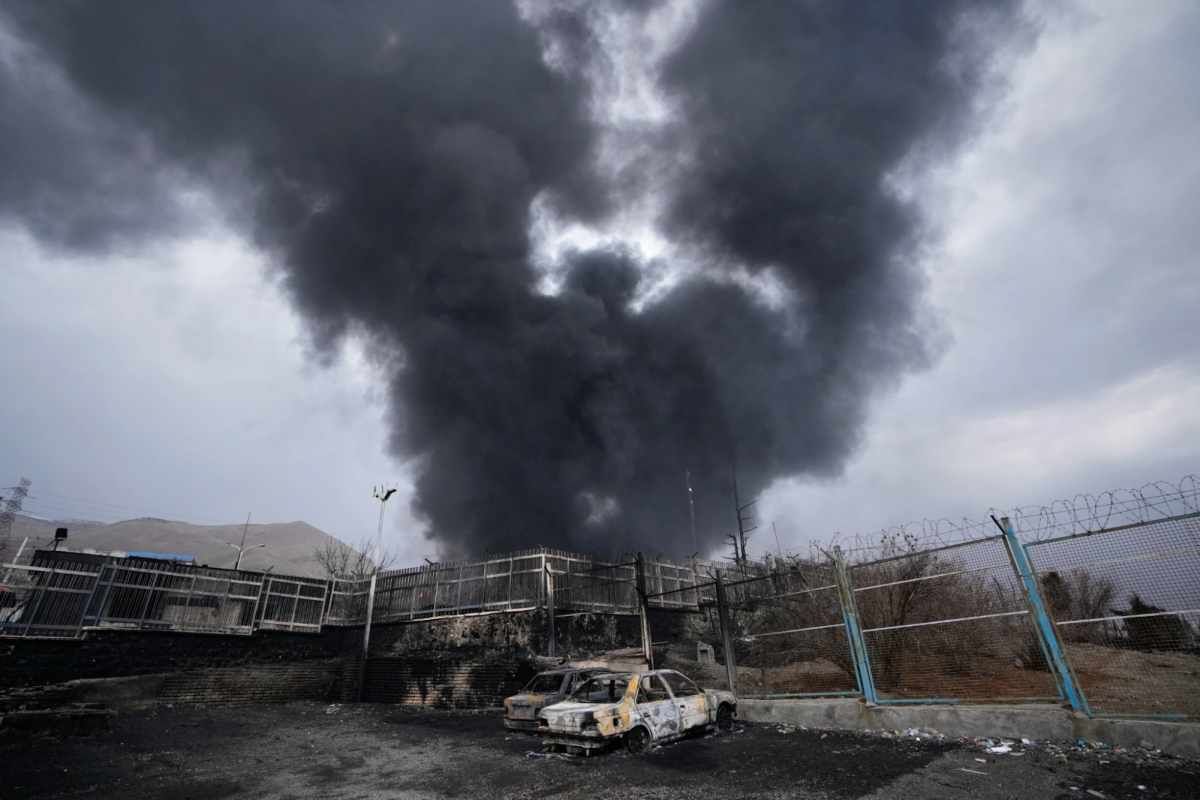
In fact, according to the Environmental Defense Fund, if we do not take action against climate change, its impacts are going to start costing the world around $38 trillion a year. Even more than the economic impacts, it is going to start costing us human lives. In September of this year, over 200 people lost their lives due to floods in Nepal. These floods, as found by Earth.org, were made more likely and more intense by human-made climate change. A similar tragedy happened with flooding in Pakistan earlier this year, where hundreds were killed. Rainfall, according to CNN, was made “10% to 15% heavier because of climate change.” And, while these floods may have made the news, there is little reporting done on how climate change makes these events worse.
I would like to say that I still have high hopes for this year’s COP, but in the past, many of these sessions have yielded little in the way of progress. Some notable developments have been made, like at COP21 in 2015, where the Paris Climate Agreement was drawn up, and countries agreed to keep global temperature increases below 2 degrees Celsius, but COP sessions often lead to nothing more than empty promises.
Due to a pattern of a lack of action on the leaders’ part, some people have taken matters into their own hands. According to the BBC, on Tuesday Nov. 11, protestors broke into the venue in which the conference was being held. These protestors were from both indigenous groups and a Brazilian youth movement called Juntos. They were stopped by security before they could actually enter the conference, but I believe their actions showcase a global feeling of anger over a lack of action by world leaders.
Regardless of the actions of world leaders, you as an individual are able to create change. I encourage you to get involved in local environmental organizations, like the Chesapeake Bay Foundation, or start meeting with like-minded people to perform service projects, like beach cleanups.
It can feel overwhelming, especially when these problems are affecting us on a global scale. But, doing something small is better than doing nothing. If we work together, we can make a difference.