


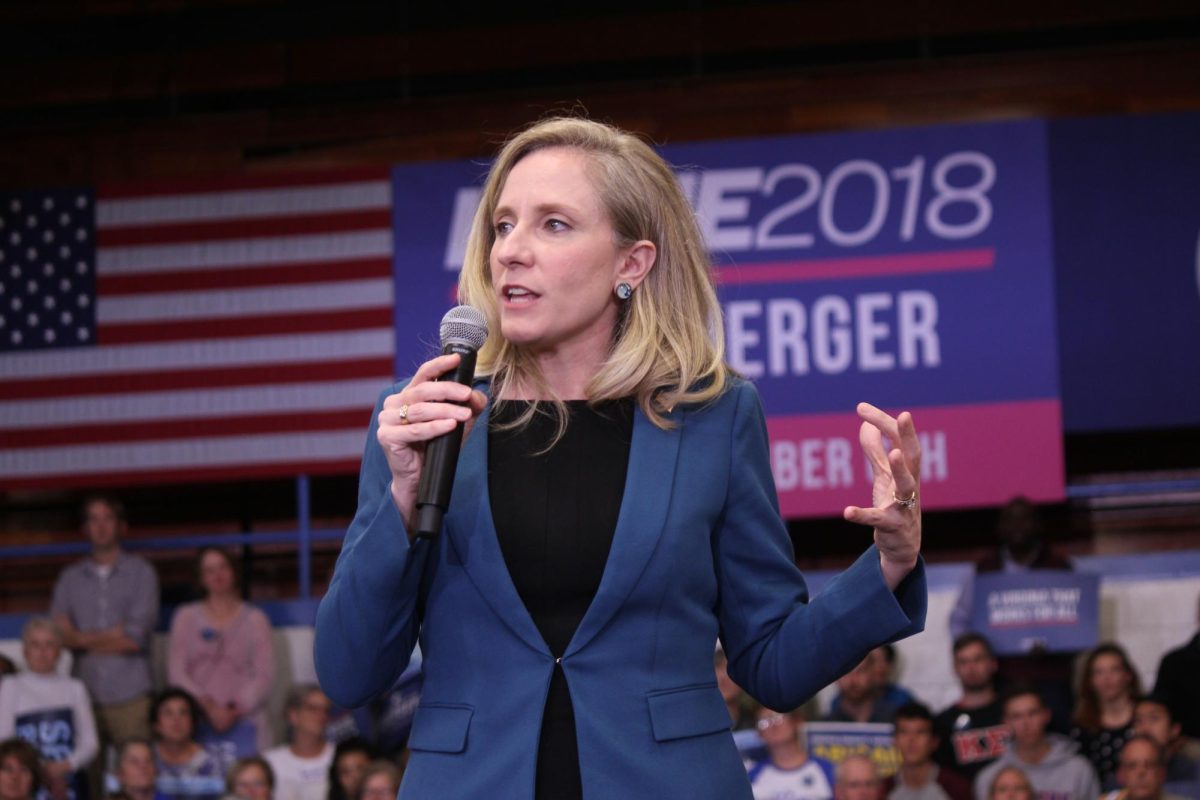
Abigail Spanberger was elected the first female governor of Virginia in the past gubernatorial election on Nov. 4, 2025. After two years of campaigning, Spanberger’s efforts were rewarded with the governorship of the commonwealth and a margin of 15 points (57.4 – 42.4) over Lt. Gov Winsome Earle Sears.
Spanberger was born and raised in Henrico County, Virginia, where she lived with her mother, father, and two younger sisters. Her mother worked as a nurse, and her father was a member of the Army before becoming a career law enforcement officer. After winning the election, Spanberger honored her parents during her victory speech, thanking them for teaching her service and sacrifice.
Spanberger received her bachelor’s degree from the University of Virginia and earned her MBA from a dual degree program at Purdue University and the GISMA business school in Germany. After university, Spanberger joined the CIA as a Case Officer, where she worked to prevent terrorist attacks and track criminal organizations across multiple nations.
In 2018, Spanberger ran for Congress and became the first Democrat in 50 years elected into the House to represent Virginia. Along with that, she became the first woman to represent the district. During her time in Congress, she was voted the “most bipartisan member from Virginia,” and was called “ever independent-minded” by the Washington Post.
This year, two women ran for governor of Virginia: Spanberger and her Republican opponent, Sears. “I was really excited to see that two females were running for governor,” said IB junior Amber Musselman, “having a female governor will definitely impact local politics.” Musselman also expressed hopes that the election of the first female governor will cause an uprising in women running for public office and, “hopefully winning.” She believes that Spanberger’s policies will lead to a “more equitable state”.
Similarly, government teacher Angela Cosimano stated, “We need more female voices and leadership,” and hopes to see more political decisions that will benefit women.
Cosimano and Musselman expressed shock at how long it took for Virginia to elect a woman to the role of governor, considering Virginia is more of a middle-ground state. “Even red states like Kentucky have had a female governor before,” said Musselman. Similarly, Cosimano simultaneously believed it wasn’t too far-fetched that it took all this time to achieve this.
Spanberger has had many titles, and she can now add the title of Virginia’s first female governor. Spanberger’s election is more than a milestone; it’s a symbol of hope to women who aspire to be in a political climate run mainly by men. Hopefully, Virginia begins to see more women and strong leaders step up and diversify Virginia’s politics.